There’s a tension at the heart of almost every home care arrangement, and it’s this: how do you keep someone safe without making them feel like they’ve lost control of their own life?
It’s a question that doesn’t have a clean answer. Push too far toward safety, and your parent feels watched, controlled, diminished. Pull too far toward independence, and you’re lying awake at night wondering if they’re okay.
Most families land somewhere in the messy middle, constantly recalibrating as needs change. That’s not a failure of planning. That’s the reality of caring for someone whose abilities are evolving. The goal isn’t to find a perfect balance that never shifts. It’s to build a framework flexible enough to shift with them.
Why This Balance Matters So Much
Independence isn’t just a preference for older adults. It’s deeply tied to identity, dignity, and mental health. Research consistently shows that older adults who maintain a sense of autonomy and purpose have better cognitive function, lower rates of depression, and higher overall quality of life.
When well-meaning families remove too many choices, even for safety reasons, the psychological impact can be significant. A parent who used to cook their own meals, manage their own schedule, and make their own decisions may become passive and withdrawn when those things are taken away, even if the intention was protective.
Safety matters enormously. But so does the sense that your life is still your own.
Where Families Tend to Over-Correct
After a scare, whether it’s a fall, a medication error, or a wandering episode, the instinct is to lock everything down. Suddenly the parent isn’t allowed to use the stove, isn’t left alone for any period, and has every decision made for them.
This reaction is understandable. But it often overcorrects. A single incident doesn’t necessarily mean the person can’t do anything independently. It means one specific area needs to be addressed.
A better approach is to evaluate each activity individually. Can they still manage personal hygiene with minor assistance? Can they prepare simple meals if the kitchen is set up safely? Can they be alone for a few hours if someone checks in by phone? The answers will vary, and they’ll change over time, but treating each domain separately prevents the kind of blanket restriction that strips away more independence than necessary.
Related reading: When Supervision Becomes a Safety Issue
Practical Strategies for Finding the Balance
Modify the environment, not the person. Instead of telling your parent they can’t cook, make the kitchen safer. An automatic stove shut-off, good lighting, frequently used items at counter height, and a fire extinguisher within reach allow them to continue doing something they enjoy while reducing risk.
Use technology as a bridge. Medical alert systems, motion sensors, video doorbells, and medication reminder devices can provide a safety net without requiring constant human supervision. They give your parent space while giving you peace of mind.
Build in choice wherever possible. Even when certain decisions need to be made for safety, there are usually choices within those decisions. Your parent may not get to decide whether they need a caregiver, but they can choose which caregiver they prefer. They may not get to drive anymore, but they can choose where they want to go.
Match the caregiver to the philosophy. Some caregivers naturally lean toward doing things for the person. Others instinctively encourage the person to do things for themselves, with support. For maintaining independence, the second approach is far more beneficial. When working with a registry, communicate this preference clearly.
Related reading: Small Home Risks That Lead to Big Problems
The Caregiver’s Role in This Balance
A skilled caregiver understands that their job isn’t to take over. It’s to support. The difference is significant.
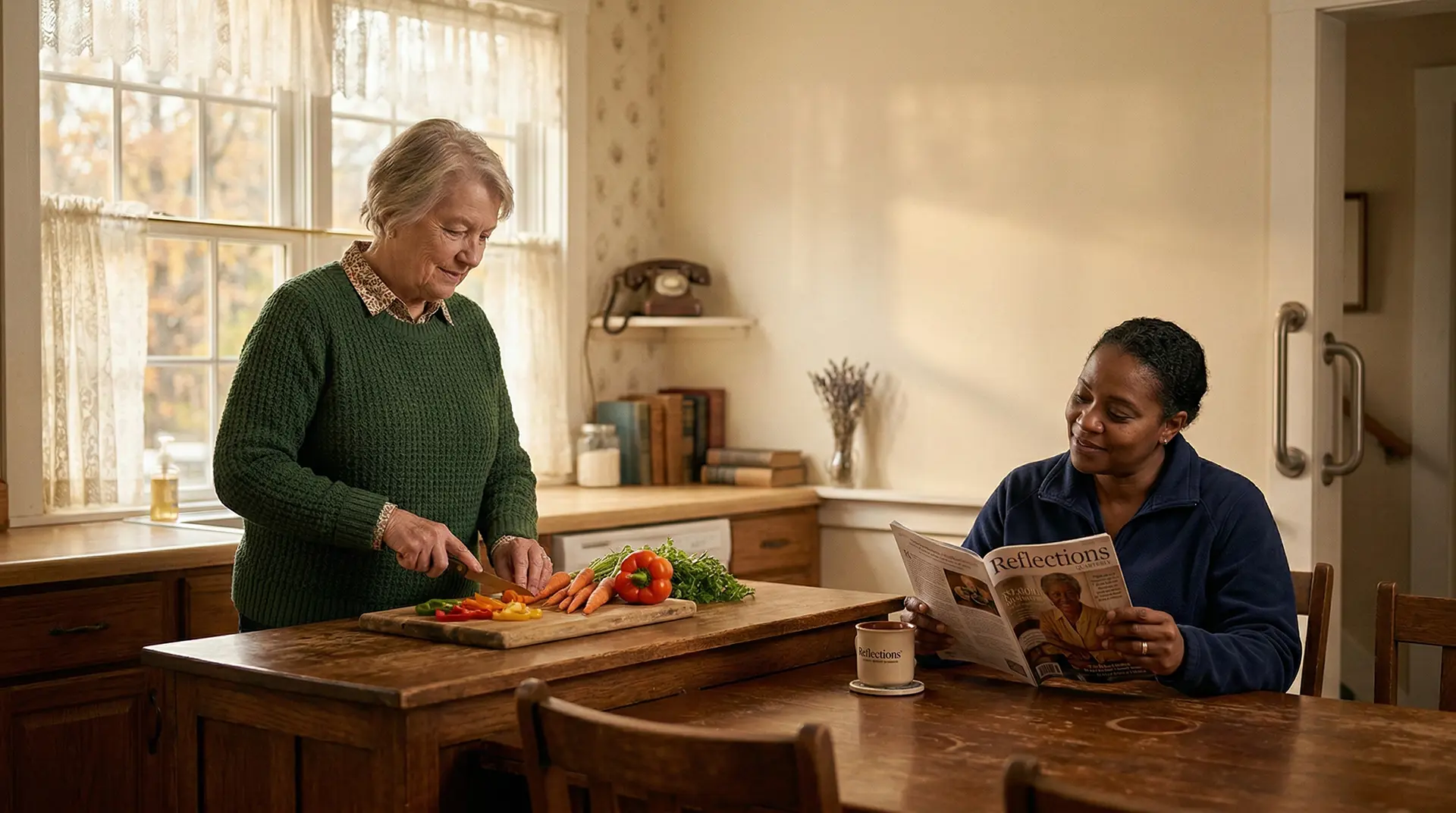
Taking over looks like: preparing every meal, choosing what the person wears, managing every aspect of their day. Supporting looks like: being present while the person prepares their own breakfast, offering help when it’s needed, stepping in when safety requires it, and stepping back when it doesn’t.
This requires judgment, patience, and a genuine respect for the person’s autonomy. It’s one of the reasons personality match matters so much in home care. A caregiver who naturally respects boundaries and encourages independence will be a far better fit than one who, however well-intentioned, tends to take control.
Related reading: What Caregivers Wish Families Understood
Recalibrating Is Normal
The balance between safety and independence isn’t something you set once and walk away from. It shifts as your loved one’s abilities change. What worked three months ago may not work today. What feels like too much restriction now may feel exactly right in six months.
Regular reassessment, checking in with your parent, with the caregiver, and with yourself, keeps the arrangement current and prevents the kind of drift that leads to either unnecessary risk or unnecessary restriction.
At the Reflections Home Care Registry, we help families find caregivers who understand this balance intuitively. People who know when to help and when to step back. People who treat your loved one as a whole person, not a set of tasks to be managed.
For families navigating this balance across multiple domains, a care manager can provide the objective assessment and ongoing monitoring that keeps the arrangement working for everyone.