
When families start looking into in-home care, one of the first questions that comes up is: what kind of help do we actually need?
It sounds simple, but the answer matters more than most people realize. The type of care you arrange, whether it’s companion care or personal care, shapes everything from who you hire to how much support your loved one receives on a daily basis. Getting this right from the start saves families time, money, and a lot of unnecessary stress.
Here’s what each type involves and how to figure out which one fits your situation.
What Is Companion Care?
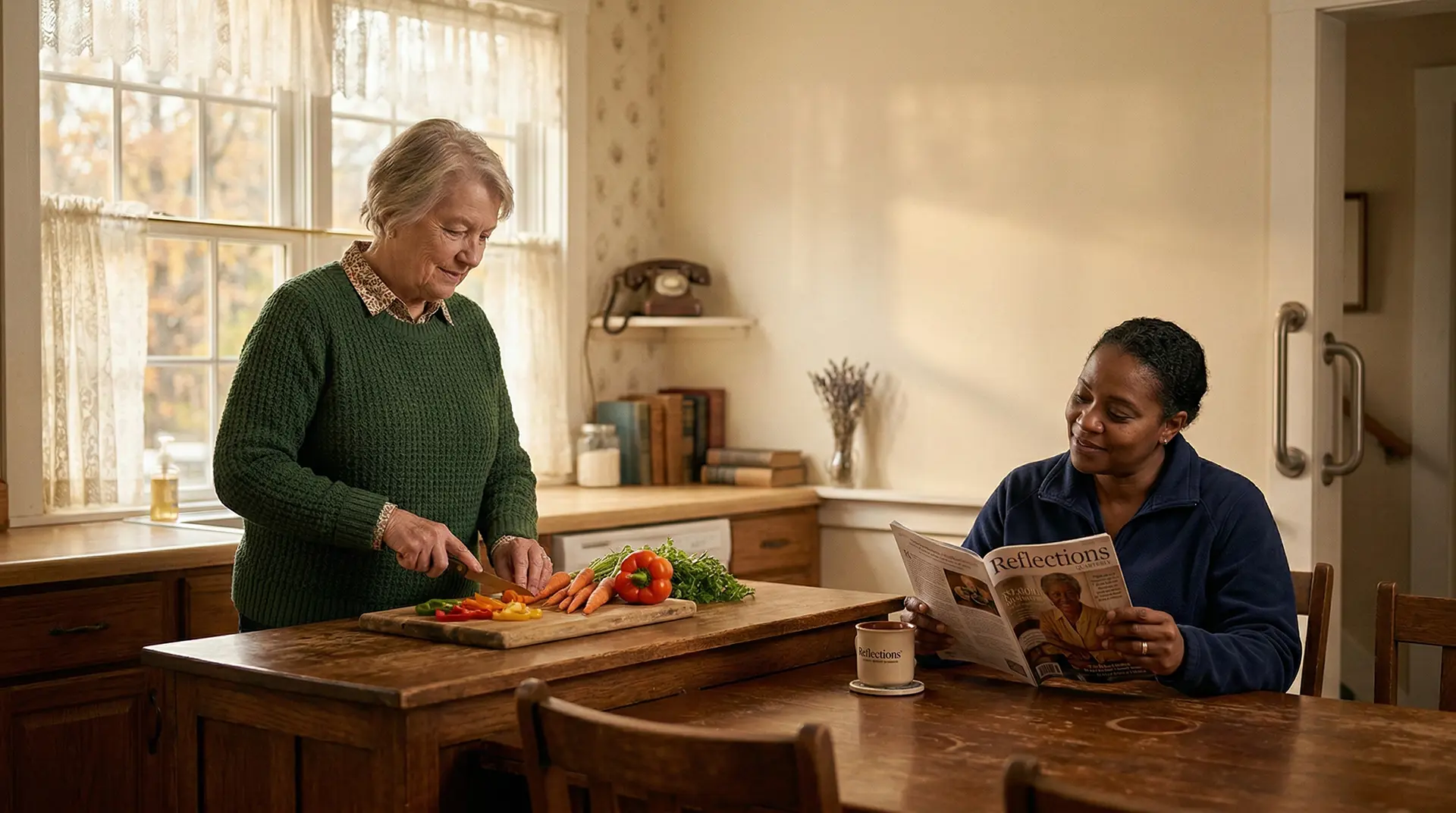
Companion care is exactly what it sounds like, supportive, non-medical help that focuses on companionship, daily activities, and light household tasks. A companion caregiver doesn’t provide hands-on physical care like bathing or dressing. Instead, they’re there to keep your loved one engaged, safe, and comfortable in their home.
Companion care typically includes things like conversation and social interaction, light meal preparation, help with errands and grocery shopping, medication reminders (but not administration), accompanying your loved one to appointments or outings, light housekeeping like laundry and dishes, and just being a friendly, consistent presence.
For many families, companion care is the right starting point. It’s a good fit when your loved one is still fairly independent but could benefit from regular company and a helping hand with everyday tasks. It’s also common for families who live at a distance and want to know someone is checking in regularly.
What Is Personal Care?
Personal care goes a step further. It involves hands-on assistance with the physical activities of daily living that a person may no longer be able to manage safely on their own.
This includes help with bathing, grooming, and hygiene, dressing and undressing, transferring in and out of bed or a chair, toileting and incontinence care, mobility assistance (including fall prevention support), and feeding when needed.
Personal care aides are trained to provide this kind of support with dignity and respect. It’s a more involved level of care, and it becomes necessary when physical or cognitive changes make it difficult, or unsafe, for someone to handle these tasks alone.
How Do You Know Which One You Need?
The honest answer is: it depends on where your loved one is right now, and where things are heading.
If your parent is still managing most daily activities but you’ve noticed they’re becoming more isolated, skipping meals, or letting household tasks slide, companion care is likely the right fit. It fills the gaps without taking away independence.
If your parent needs physical help getting through the day, whether it’s safely getting in and out of the shower, managing mobility challenges, or dealing with incontinence, personal care is the more appropriate option.
And here’s something important: it doesn’t have to be one or the other forever. Many families start with companion care and transition to personal care as needs evolve. Having a flexible arrangement means you can adjust without starting from scratch.
Why the Distinction Matters for Hiring
When you’re looking for a caregiver, knowing the level of care you need helps you find the right person. A wonderful companion caregiver may not be trained or comfortable with hands-on personal care, and a skilled personal care aide may not be the best fit if what your loved one really needs is someone to share meals and conversation with.
Being clear about this upfront, both with yourself and with whoever is helping you find a caregiver, makes the process smoother and more successful.
Not sure what level of care your loved one needs? A care manager can conduct a thorough assessment and help you determine the right fit. That’s exactly what the team at Reflections Management and Care does.
A Few Things to Keep in Mind
Start earlier than you think you need to. Families often wait until a crisis, a fall, a hospital stay, a sudden decline, to start looking into care. By then, decisions are being made under pressure. If you’re starting to wonder whether your loved one could use some help, that’s a good signal to explore your options.
Care needs change, and that’s normal. What works today might not work six months from now. The best caregiving arrangements are ones that can grow and adapt as your loved one’s situation evolves.
You’re not giving up by getting help. Bringing someone into the home isn’t a failure. It’s a thoughtful decision that can actually help your loved one stay independent longer. And it gives family caregivers room to breathe, which matters more than most people admit.
If you’re ready to explore in-home care options, the Reflections Home Care Registry connects families in Central New York with experienced, vetted caregivers for both companion care and personal care. We’re here to help you find the right match.